Horse Dewormer Expiration Dates: Do They Matter?
Learn why expiration dates on horse dewormer products matter, what happens when products expire, and how to check and manage your dewormer inventory for safety and effectiveness.
QZQAB Editorial Team
Equine Health Content Specialists
Important Safety Information
This article is for educational purposes only. It does not constitute veterinary advice. Always consult a licensed veterinarian for guidance specific to your horse.
Why Expiration Dates Exist on Dewormers
Every FDA-regulated animal health product, including equine dewormers, carries an expiration date. This date represents the manufacturer's guarantee that the product meets its labeled potency and quality specifications when stored under the conditions described on the label.
Expiration dates are determined through stability testing conducted by the manufacturer. The product is tested at various intervals under controlled storage conditions to verify that the active ingredient maintains its labeled concentration and that the physical properties of the product (consistency, uniformity, pH) remain acceptable.
For horse dewormer products, the expiration date is your best indicator of whether the product can be expected to perform as intended.
What Happens When a Dewormer Expires
Potential Loss of Potency
The primary concern with expired deworming products is reduced potency. Over time, the active ingredient may degrade, potentially falling below the concentration needed for effective parasite treatment.
If you administer a product with reduced potency:
- The product may not effectively treat the parasites it is labeled to target
- Sub-therapeutic dosing can contribute to the development of parasite resistance — a growing concern in equine medicine
- You may believe your horse has been treated when it has not been effectively dewormed
Physical Degradation
Beyond potency, expired products may show physical changes:
- Separation — the paste may separate into components rather than remaining uniform
- Texture changes — the product may become too stiff, runny, or grainy
- Color changes — noticeable discoloration may indicate chemical breakdown
- Damaged packaging — integrity of the tube and plunger may deteriorate over time
Rule of thumb: If a dewormer product looks, smells, or feels different from what you would expect of a fresh product, do not use it — even if it is still within its labeled expiration date.
How to Check Expiration Dates
Where to Find the Date
Expiration dates on equine dewormer products are typically printed on:
- The outer carton or box
- The individual tube or syringe label
- The crimp or end of the tube
What Format to Expect
Expiration dates may appear in several formats:
- Month/Year (e.g., "EXP 03/2027")
- Date format (e.g., "Use before March 2027")
- Lot code with date — some products embed the expiration in a lot code
If you cannot locate or read the expiration date, contact the manufacturer or your feed store for clarification. Our guide on reading dewormer labels covers other important label sections.
Multi-Pack Considerations
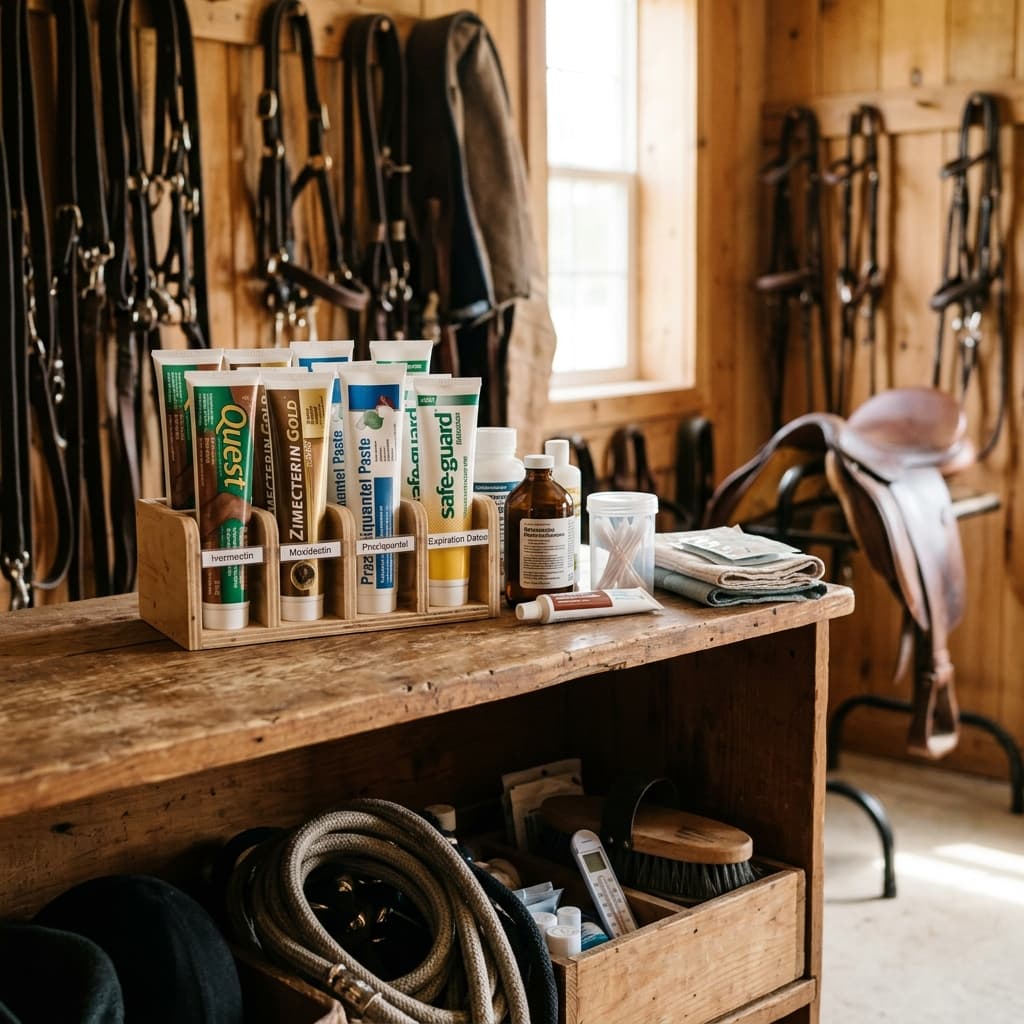
When purchasing multi-pack dewormer products like the 6-pack ivermectin options reviewed on this site, check the expiration date against your expected usage timeline. If you plan to use one tube every few months, ensure all tubes in the pack will still be within date when you are ready to use them.
Best Practices for Managing Dewormer Inventory
Buy What You Need
Resist the temptation to stockpile dewormer products in bulk unless you can realistically use them before expiration. While multi-packs offer per-tube value, buying more than you can use is counterproductive.
First In, First Out
If you maintain an inventory of dewormer products:
- Use the oldest (earliest expiration) products first
- Place newer products behind older ones on the shelf
- Check expiration dates regularly as part of your barn management routine
Track Purchase Dates
Recording when you purchased dewormer products helps you:
- Estimate remaining shelf life
- Plan future purchases
- Identify products that may be approaching expiration
Proper Storage Extends Shelf Life
Products stored correctly are more likely to remain effective through their labeled expiration date. Key storage principles:
- Temperature: Store at the temperature range specified on the label. Most paste dewormers should be stored at room temperature, away from extreme heat or cold.
- Light: Protect from direct sunlight and prolonged light exposure.
- Moisture: Keep in a dry location.
- Physical integrity: Do not store tubes where they may be crushed, punctured, or damaged.
For a comprehensive storage guide, see our article on how to store equine paste products.
Can You Use an Expired Dewormer?
The short answer: it is not recommended.
While some products may retain some effectiveness past their labeled expiration date, there is no way to verify this without laboratory testing. The risks of using an expired product include:
- Reduced or unpredictable effectiveness — you cannot know the actual remaining potency
- Contribution to resistance — sub-therapeutic dosing is a risk factor for parasite resistance development
- False confidence — you may believe your horse has been treated effectively when it has not
- Physical safety — degraded products may behave differently during administration
The cost of a new tube of dewormer is minimal compared to the potential consequences of using a compromised product. When in doubt, replace the product.
What to Do With Expired Products
Disposal
Do not dispose of expired dewormer products by:
- Flushing down drains or toilets
- Throwing directly into open trash where animals or children could access them
- Dumping onto pasture or soil
Proper disposal options:
- Follow any disposal instructions on the product label
- Contact your veterinarian for guidance on safe disposal in your area
- Check if your local waste management authority has pharmaceutical disposal programs
- Many states have take-back programs for animal health products
Buying Tips to Avoid Expiration Issues
-
Check dates before purchasing. This applies whether buying from a feed store, tack shop, or online retailer. See our guides on buying dewormer on Amazon for online-specific tips.
-
Be cautious with heavily discounted products. Items on clearance or deep discount may be approaching their expiration date. Check before buying.
-
Buy from reputable retailers. Established retailers have higher inventory turnover, reducing the chance of receiving near-expiration products. For tips on avoiding purchasing pitfalls, see common mistakes buying dewormers online.
-
Verify upon delivery. When products arrive (especially from online orders), immediately check the expiration date. If it is unacceptably close, consider returning the product.
Frequently Asked Questions
How long do horse dewormers last before expiring?
Shelf life varies by product and manufacturer but is typically 2-3 years from the manufacture date when stored according to label directions. Always check the specific expiration date printed on the product.
Does refrigerating dewormer extend its shelf life?
Unless the product label specifically instructs refrigeration, store at room temperature. Refrigeration is not recommended for most paste dewormers and may actually affect the product's physical properties. Follow the label storage instructions exactly.
I used an expired dewormer on my horse. Should I be worried?
An expired product is unlikely to be harmful, but it may be less effective. Contact your veterinarian to discuss whether a follow-up fecal egg count test or re-treatment with a fresh product is warranted.
Can extreme temperatures cause a dewormer to expire faster?
Yes. Storage at temperatures outside the labeled range — especially prolonged heat exposure (e.g., leaving product in a vehicle during summer) — can accelerate degradation of the active ingredient. This may compromise the product even before the printed expiration date.
Does opening the tube shorten the expiration?
Once a tube has been partially used and the seal broken, the remaining product may be affected by air exposure and contamination. Most paste dewormer tubes are designed for single-dose use. If you must store a partially used tube, do so according to label directions and use it promptly.
Summary
Expiration dates on horse dewormer products serve an important purpose — they indicate the period during which the manufacturer guarantees potency and quality. Using expired products risks reduced effectiveness and may contribute to parasite resistance.
Good inventory management practices — buying what you need, storing properly, tracking dates, and using products first-in-first-out — help ensure that the dewormer you administer is performing at its best. When in doubt, replace expired products with fresh ones and continue working with your veterinarian on a testing-based parasite management program.
This article is for educational purposes only. It does not constitute veterinary advice. Always consult a licensed veterinarian for guidance specific to your horse.
Related Articles
How to Store Equine Paste Products Properly
Storing dewormer paste correctly preserves its effectiveness. Follow these guidelines to ensure your investment stays potent.
How to Give a Horse Dewormer Paste: Step-by-Step Guide
Administering dewormer paste doesn't have to be stressful. These practical tips help horse owners prepare for a smoother experience.
Traveling With Horses: Deworming Considerations
Traveling with horses introduces parasite management questions. Here's what to think about before, during, and after travel.
Independent affiliate guide. Not affiliated with or endorsed by any product manufacturer, marketplace, or brand mentioned on this site. As an Amazon Associate I earn from qualifying purchases.